Sunday, May 10, 2026

5 Ways Judaism Honors Mothers : HAPPY MOTHERS' DAY 5/10/26

THIS IS MY FIRST MOTHERS' DAY WITHOUT MY MOM, Z'L.

5 Ways Judaism Honors Mothers

Inline image

Mothers are honored all year round in Jewish tradition.

Mothers are central to Jewish life, and Jewish tradition is full of concrete ways we honor mothers. Here are five ways Judaism honors mothers – on Mother’s Day, and every day of the year.

Heroic Jewish Mothers

Throughout the Torah and Jewish literature, mothers stand out as key figures who enabled Judaism and the Jewish people to survive.

Each Passover, we remember the Jewish midwives in ancient Egypt who, on pain of death, defied Pharaoh’s order to kill all Jewish baby boys and throw them into the Nile. We recall the matriarchs – Sarah, Rebecca, Rachel and Leah – who molded and created the Jewish people. Hauntingly, the Torah describes that our matriarch Rachel is charged with pleading on behalf of the Jewish people in the World to Come: “A voice is heard on high, wailing, bitter weeping, Rachel weeps for her children” (Jeremiah 31:14); it is her merit that we returned from exile, intact and whole and continued Jewish life.

The Torah recounts that time and again, it was Jewish women, often mothers, who stood up for what was right. In our darkest days of slavery in Egypt, Jewish men began to despair: what was the point of getting married and building Jewish families, when their children would only suffer in slavery as they did? It was Jewish wives and mothers who came to the rescue: day after day, after hours of backbreaking work, these women found the energy to dress beautifully and carve out time with their husbands, making space for family life and ensuring the survival of future generations of the Jewish people. Later, when some Jews built a golden calf to worship in the desert, again it was the Jewish women who resisted, maintaining their belief in God alone.

King Solomon described all of Jewish tradition as emanating from our mothers: “Do not forsake the Torah of your mother” (Proverbs 1:8). Throughout history, it’s Jewish mothers who’ve instilled Jewish knowledge and a love of being Jewish in their children, and our tradition recognizes this profound truth.

A Woman of Valor

Each Friday night, Jews around the world recite a beautiful poem at the Shabbat table, Eishet Chayil (“A Woman of Valor”). Written by King Solomon, this is the ultimate tribute to the Jewish people and our relationship with God. I sing this to Ellen and used to sing it to mom.

Eishet Chayil describes an ideal woman and her relationships with her friends and family, neighbors, husband and children. Jewish tradition teaches that it is also allegorical: this idealized mother is none other than the people of Israel. King Solomon wrote the poem as a paean to his own mother Batsheva, and it’s infused with love and admiration. In describing the ideal woman and mother, we are painting a picture of the qualities we most want in ourselves.

Some families, have started a unique family tradition at our Shabbat table. Before we sing Eishet Chayil, I ask  each of our guests to name three things their Mom did for them that week. It’s a fun exercise and sets a tone of gratitude and appreciation that lasts far beyond Friday dinner. It also helps them realize that the woman of valor we sing about shares many qualities with real life mothers: she is charitable, she’s hardworking, she takes care of her family. “Her children rise up and call her blessed with happiness; also her husband, and he praises her” we sing. (Proverbs 31:28) It’s a beautiful moment that underscores Judaism’s reverence of moms.

Respecting Mothers

The Ten Commandments tell us to treat parents with respect. The Torah repeats this timeless injunction with two different word choices. In Exodus, we’re instructed “Honor your father and your mother” (Exodus 20:12). In Leviticus God commands “You shall fear your mother and your father” (Leviticus 19:3). Traditionally, Jewish thought has interpreted this to mean that there are certain key obligations we have to “honor” our parents and others to “fear” them.

“Fearing” our parents means not being rude to them. This might sound like common sense, but it’s a refreshing change from some behaviors that modern parents are dealing with. Jewish tradition stipulates concrete steps: children aren’t to call parents by their first names. If parents have an accustomed seat that everyone knows is theirs, we’re not allowed to sit in it. We’re not to do anything that might embarrass our parents.

The commandment to “honor” our parents has its own specific advice. We are to help our parents: bringing them food and drinks, standing in respect when we encounter them, and helping them in material ways. We are to talk about them in ways that enhance their dignity and avoid dwelling on their shortcomings when we talk to our friends and others.

For moms these days, these ancient instructions are particularly refreshing. One 2005 poll found that nearly 70% of Americans felt that people were ruder than a generation ago – and kids were ranked the least courteous and respectful of all. A 2002 study found that only 9% of Americans felt the children they saw acted “respectfully” towards adults. For parents caught in the crosscurrents of raising courteous kids in a discourteous age, Judaism’s tried-and-true rules for respecting parents can be a big help. It might seem restrictive at first to be told we can’t roll our eyes and complain about our parents when we’re fed up, but trying to live up to the Jewish ideal of honoring our parents can help us grow and become more sensitive – and can help send a powerful message to our children about compassion and respect.

Honoring Parents Continues After Death

In Judaism, our obligation to honor our mothers and fathers never ends. The injunctions to speak respectfully about our parents, to honor them and burnish their memories continues even after our parents are no longer in this world. It’s customary to refer to parents who are no longer living with the Jewish phrase “of blessed memory”, and to perform acts of Jewish learning and charitable actions in their memories.

Mothers as Partners with God

In Jewish thought, motherhood isn’t only raising a child; it’s being partners with the Divine. The Talmud teaches that “there are three partners in (creating) a man: the Holy One, blessed be He, his father and his mother” (Niddah 31a). (The Talmud specifies that this includes adoptive parents too, not only biological parents.) The moment of giving birth is compared to the creation of the world: both are awesome miracles and times of intense holiness.

When we name our children, the Talmud explains that mothers (and fathers too) receive a measure of prophecy in order to choose the right name for their particular child (Brachot 57b). It’s a different way of looking at parenthood: not only raising children, but doing so in a way that brings sanctity and spirituality into the world.

This Mother’s Day, amid the flowers and gifts and celebrations, try carving out time to incorporate some of these traditional Jewish mindsets and ways to honor our mothers, as well. Doing so can enhance the ways we look at our moms and approach motherhood – and can make the time we spend with our mothers extra special and meaningful.

Inline image
BLANCHE LEVINE SEGAL 1926-2025


SHALOM and BLESSINGS:
RABBI DR ARTHUR SEGAL,retired
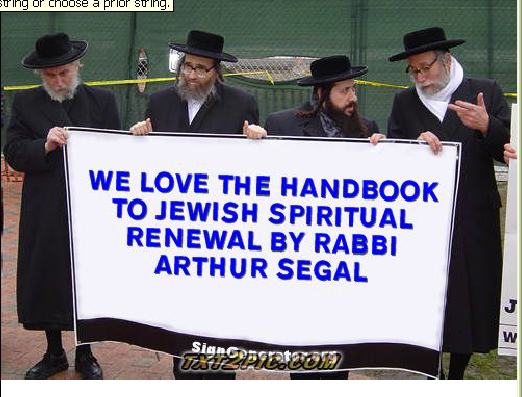
WWW.JEWISHSPIRITUALRENEWAL.COM/books 
 https://www.facebook.com/arthur.l.segal


SHALOM and BLESSINGS:
RABBI DR ARTHUR SEGAL,retired
WWW.JEWISHSPIRITUALRENEWAL.COM/books 
 https://www.facebook.com/arthur.l.segal
Uploaded Image Uploaded Image

Tuesday, March 10, 2026

THE STORK WHO FLEW TO THE SHIVA MINYAN RABBI ARTHUR SEGAL


THE STORK WHO FLEW TO THE SHIVA MINYAN: A MUSSAR LESSON FROM OUR TALMUD, MIDRASH, AND RABBINIC TEXTS


Inline image


THE STORK WHO FLEW TO THE SHIVA MINYAN: A MUSSAR  LESSON FROM OUR TALMUD, MIDRASH, AND RABBINIC TEXTS

BY DR RABBI ARTHUR SEGAL, HILTON HEAD ISLAND, SC ; JANUARY 7, 2026


WHY DO WE NEED A MINYAN FOR SHIVA? WHY WON'T PEOPLE FROM ONE CONGREGATION ATTEND A SHIVA FOR A JEWISH FAMILY OF ANOTHER CONGREGATION OR ONE WHO DOES NOT BELONG TO ANY CONGREGATION?

The answer to the second part of the question is answered in detail by our Chazel, our sages of blessed memory, in Midrash, Talmud and Rabbinic writings.

They teach a very spiritual concept of "All Jews are Responsible for one another'' by teaching about the stork and it's behaviors. "Kol Yisrael arevim zeh bazeh" (

    זה בזה ערבים ישראל כל) {Talmud Bavli  Tractate Shevuot daf 39a]. The rabbis wanted to include inclusivity and community as one of the means of survival in Galut (the diaspora}. The concept is used to encourage inclusivity across different denominations and levels of observance, emphasizing that the community must be united to fulfill the Torah.

So the rabbis discuss why the Stork (Chasidah) Is Not Kosher, Despite Its Name Meaning "Kindness."

1. Midrashim Source

Vayikra Rabbah 13:5 explains that the stork is called chasidah ("the kindly one") because it performs acts of kindness, but ONLY toward its own species. This selective kindness is considered ethically deficient.

2. Talmudic Reference

Talmud Bavli Tractate Chullin daf 63a identifies the chasidah and notes its distinctive behavior of sharing food with others of its OWN TYPE. Rabbinic tradition places it in the non-kosher list despite this trait.

3. Rishonim and Acharonim

Maharal (Gur Aryeh, Shemini) teaches that true chesed must be universal and outward-facing, not limited to one's inner circle. The stork represents a distorted form of kindness, serving only its own kind.

Rabbi Samson Raphael Hirsch (commentary on Vayikra 11) argues that favoritism is ethically flawed and symbolizes corruption of justice. Thus, the bird, despite its name, is morally unsuitable as a kosher species.

4. Chassidic Interpretations

Sefat Emet and other Chassidic works emphasize that the stork's kindness is instinctual, not a product of ethical choice. Kosher creatures represent refined moral potential, not reflexive behavior.

Summary

The stork is called chasidah because it shows kindness, but only within its own group. Rabbinic sources consider such PARTIAL KINDNESS ETHICALLY INADEQUATE, and therefore the bird remains non-kosher despite its name. Our rabbis insist that when a congregation has an Ahavath Chesed [loving kindness committee] forming a minyan and companionship for a mourner who's family were dues paying members, but will not show the same Ahavath Chesed to a Jewish Family who is not a member, then that congregation is ethically flawed.

So let us see how the Rabbis discussed the first part of the above question: '' WHY DO WE NEED A MINYAN FOR SHIVA?''

This leads us to a discussion on minyan formation, rabbi Judah HaNasi and pastoral dimension of communal prayer.    

I.                    Introduction

The part of this essay gathers classical, medieval, and modern sources on difficulties assembling a minyan, the spiritual and pastoral importance of communal presence, and halakhic creativity used in emergency situations. Included are sources from the Talmud Bavli, Talmud Yerushalmi, Midrashim, Rishonim, and modern scholars.


II. Rabbi Judah haNasi and Minyan-Related Narratives

1. Shabbat daf 152b – Rabbi Judah haNasi assembles a minyan for a man who died without mourners. 

   The deceased later appears to him in a dream, expressing comfort that ten accompanied him. 

   This story is often cited as a PASTORAL MODEL DEMONSTRATING THE PSYCHOLOGICAL AND SPIRITUAL COMFORT A MINYAN PROVIDES.


2. Difficulty assembling a minyan:

   While not always explicit in Bavli, many responsa and community records emphasize that even prominent figures such as Rabbi Judah haNasi sometimes struggled to gather ten. The Yerushalmi and later halakhic literature preserve several examples of communal difficulty forming a minyan for prayer, burial, and Torah reading.


III. Why Ten? "Edah" from the Ten Spies

• Bavli Megillah daf 23b and Berachot daf 21b derive the requirement of ten from "edah"—the congregation of the ten spies (Numbers 14:27).  Berachot daf 21b – "דבר שבקדושה לא יהא פחות מעשרה." It defines the requirement of ten for sanctifications such as Kaddish and Kedushah. Megillah 23b and related passages help the rabbis to derive a minyan from the term 'עדה' and discusses matters requiring ten.

• Although the spies were wicked ("edah ra'ah"), their number defines the halakhic quorum. 

• Rashi and Tosafot emphasize that the numerical definition stands independent of the spies' moral quality.


IV. Creative Counting in Cases of Need

Classical halakhic authorities mention exceptional leniencies when a minyan could not be formed:


1. Counting the mourner. 

   Fully acceptable; the mourner is a regular participant.


2. Symbolically counting the met (body/casket). 

 This is mentioned in medieval minhag literature (Sefer HaManhig). It is used as a symbolic gesture reflecting communal obligation not to leave a mourner alone.


3. Counting minors:

   a. Boys over 13 count fully. 

   b. Boys under 13 holding a Torah scroll – cited among Geonim, Rabbeinu Tam, and Rosh. Are generally rejected but mentioned in emergencies.


4. Counting someone who must leave for work:

 Some medieval sources (e.g., Maharil) accept "continuing a minyan" if the original ten were present for the beginning of prayer or Kaddish.


5. FREEING A SLAVE TO COMPLETE A MINYAN:

   In Talmud Bavli Tractate Gittin daf 38b, we read of Rabbi Eliezer freeing his slave so that the slave becomes a full Jew and may count toward ten. 

   This demonstrates the extraordinary halakhic weight placed on assembling a minyan.

  Hebrew (paraphrased): "נכנס לבית הכנסת ולא מצא עשרה ושחרר את עבדו והשלימו לעשרה."


V. Yerushalmi Sources

1. Talmud Yerushalmi Tractate Berachot 7:3 ,praises those who help complete a minyan. Communal prayer has unique spiritual merit. 

2. Talmud Yerushalmi Megillah 4:4 reads that public Torah reading requires ten.  The community must assemble ten men even with difficulty.


VI. Midrashic Sources

1. Midrash Tanchuma, Tzav : God never rejects the prayer of a congregation. 

2. Midrash Tehillim 22 : When ten gather, the Shekhinah rests upon them. 

3. Midrash Rabbah, Numbers 15 : It emphasizes communal sanctification through joint participation.


VII. Rishonim

1. Rambam, Hilkhot Tephila 8:1 read that ten are needed for sacred communal acts. The Shekhinah dwells among them. 

2. Rosh, Berachot 7 reads that the minyan is fundamental for devarim shebe-kedushah, "matters of sanctity" or "holy words.''

3. Tosafot, Megillah 23b   discusses the limits of leniencies in counting minors or borderline cases.


VIII. Modern Scholars

1. Rabbi Joseph B. Soloveitchik – Minyan reflects covenantal community; no one stands isolated. 

2. Rabbi Abraham Joshua Heschel – Community prayer prevents spiritual loneliness. 

3. Rabbi Maurice Lamm and Rabbi Marc Angel – In mourning, minyan ensures the mourner is never alone; this is both halakhic and pastoral.   On the Phrase "So the Mourner Not Be Alone" the Talmud does not contain this as a direct formula. Later pastoral and homiletic writings often explain that communal recitation of Kaddish supports the mourner and prevents isolation, but this is not presented as a Talmudic quotation.


IX. Conclusion

Sources across eras emphasize that assembling a minyan—even with difficulty—is a primary Jewish communal obligation. Creative halakhic solutions reflect the profound value placed on ensuring communal presence, especially for mourners. THE PRINCIPLE THAT "THE MOURNER SHOULD NOT BE ALONE" EMERGES AS BOTH A LEGAL REQUIREMENT AND AN ESSENTIAL PASTORAL TRUTH.

MUSSAR LESSON: Don't be a stork. Be a Homo Spiritus. Be a good Jew. Comfort the mourner, attend the shiva and funeral, whether  the family be friends of your or fellow congregants. Ahavath Chesed [loving kindness] and Ahavath Israel [love for a fellow Jew] does not begin or end with a membership list.

Rabbi Dr Arthur Segal, Hilton Head Island, SC, 12/12/25

===========================================================

SHALOM and BLESSINGS:

RABBI DR ARTHUR SEGAL,retired
WWW.JEWISHSPIRITUALRENEWAL.COM/books 
 https://www.facebook.com/arthur.l.segal

SHALOM and BLESSINGS:
RABBI DR ARTHUR SEGAL,retired
WWW.JEWISHSPIRITUALRENEWAL.COM/books 
 https://www.facebook.com/arthur.l.segal

Tuesday, February 24, 2026

A Talmudic Purim tale that leaves Rabbi Ziera 'killed' by Rabba. RABBI DR ARTHUR SEGAL

Shalom dear friends:

 Below is a cute Talmudic Purim story: 
One of my favorite Talmudic stories tells of Rabba and Rabbi Zeira, two of our greatest sages, who were celebrating Purim with a feast. Commanded to drink copiously on the joyous day, the two, the Talmud tells us, knocked back a few, until, in his drunken stupor, Rabba somehow got around to killing Zeira. Waking up the next morning with a massive hangover, a repentant Rabba prayed for Zeira's soul, reviving his friend. The following year, as Purim rolled around, Rabba once again invited Zeira out to dinner, but Zeira declined. "No thanks," he said. "After all, miracles don't happen every day."Talmud Megillah 7b 
 
SHALOM and BLESSINGS:
RABBI DR ARTHUR SEGAL,retired
WWW.JEWISHSPIRITUALRENEWAL.COM/books 
 https://www.facebook.com/arthur.l.segal


Wednesday, January 28, 2026

PM Certification FastTrack VIP

PM Certification News
View this email as Webpage


AAPM Project Management Certification Home  * About CertificationRecognition


Earn AAPM ™ Project Management Certifications with Your Existing Credentials and Diplomas.

We are the only EU Accredited Project Management Body who can provide direct certification based on your degrees, exams, and diplomas.  We are SIS Sanctioned and ISO 21001 Certified and ISO 29993 Certified.

Earn Accredited Project Management Qualification Today...

www.CertifiedProjectManager.org

1) MPM Master Project Manager  ®

Email your resume to us for revew. We can determine within 48 Hours if you are pre-qualified for certification based on your PM degree, diploma, or training. If you are not pre-qualified, you can take on of the approved PM VIP Courses offered in over  40 other countries. Email your resume to info@certifiedprojectmanager.org 

2) MMC Master Management Consultant  ®

To Apply for MMC Certification, Email your resume to info@certifiedprojectmanager.org

3) CHR Certified in Human Resources ®

To Apply for CHR Certification, Email your resume to info@certifiedprojectmanager.org

4) CRA Certified Risk Analyst ® (Certified Project Risk Manager)

To Apply for CPRM Certification, Email your resume to info@certifiedprojectmanager.org

5) CIPM Certified International Project Manager ®

To Apply for CIPM Certification, Email your resume to info@certifiedprojectmanager.org

6) CPE Certified Planning Engineer ®

To Apply for CPE Certification, Email your resume to info@certifiedprojectmanager.org

7) For Group or Corporate Certification Training, Contact Us Directly for a BID

To get a bid for Group Certification Training, Email your request to info@certifiedprojectmanager.org 


AAPM ™ CERTIFICATION WAIVERS - Under our Accreditation Agreements,  your accredited degree and diploma courses and exams count toward the education and assessment requirements.   To Reserve Your Nomination, Please email your Qualifying Resume direct to info@certifiedprojectmanager.org and make payment securely here:  Registration Payment for CIPM Certification   If you have an accredited diploma and 3 years of PM experience, we can review and approve your Certification Application.  Email Your Qualifying Resume and Specify the Certification You are Seeking. Email info@certifiedprojectmanager.org
 
 
MILITARY CERTIFICATION WAIVERS - 4 groups are qualified for a waiver for certification: 1) Warrant Officers: W-2 and above: Minimum 2 years in a Leadership Position. 2) Officers of O-2 and above: Minimum 2 years in a Leadership Position. 3) Enlisted E-6 and above: Minimum 2 years experience in a Leadership Position; restricted to BNCOC graduates and above ( BNCOC is Basic Non Commissioned Officers Course; which is where an E-6 is trained thoroughly on their specified job description ) 4) All high ranking retired officers from the armed forces who have an accredited degree. Email Your Qualifying Resume and Specify the Certification You are Seeking. Email info@certifiedprojectmanager.org
 

AAPM  American Academy of Project Management * ISO 29993 IOAS Accredited Certified  

AAPM ™ Graduate Requirements for Certification and Designation ...
  • Accredited PM related Diploma/Degree or Qualifying Military Rank
  • 3 Years of Experience in PM related areas.
  • Agree to AAPM Ethics Guidelines
  • Agree to Annual Continuing Education or Conference
Email Your Qualifying Resume and Specify the Certification You are Seeking. Email info@certifiedprojectmanager.org
AAPM ™ Globally Recognized Accreditation and Standards ...
  • IAF/IAS SIS Recognized in Europe EU European Union
  • ISO 9001 Certified Quality Management Program
  • ISO 21001 Certified Education Body.
  • ISO 29993 Accredited Training - Bildungsnorm ISO 29993 Certified for Training over the last several years. ISO 29990 is now 21001.
  • IAO QAHE ACCREDITED - ISO 9001:2008 Certified Quality Standards
  • CHEA Council of Higher Education International Quality Group (CIQG) Signatory to the New Global Standards.
  • ACBSP Business Articluation Alliance - Graduates from Top Business Schools have Preferential Treatment.
  • Read our Global Recognition   
AAPM ™ Certification Body USA - 1670-F  East Cheyenne Mtn Blvd., Colorado Springs, CO 80906  www.CertifiedProjectManager.org

www.AAPM.eu
 
CIPM Certified International Project Manager ®
 
MPM Master Project Manager ®
 
Fax Resume - 419-828-4923

info@certifiedprojectmanager.org
© All rights Reserved -  International Academy of Project Management 


To be removed from this list please visit manage subscription to unsubscribe.

Media LLC
1670-F East Cheyenne Mtn Blvd, Box 293 Colorado Springs, CO 80906