Thursday, April 26, 2012

RABBI ARTHUR SEGAL: JEWISH SPIRITUAL RENEWAL: EMOR: EYE FOR EYE IS NOT LITERAL

RABBI ARTHUR SEGAL: JEWISH SPIRITUAL RENEWAL: EMOR: EYE FOR AN EYE IS NOT LITERAL
 
RABBI ARTHUR SEGAL:EMOR:JEWISH RENEWAL:JEWISH SPIRITUAL RENEWAL:CHILLUL HA SHEM 

RABBI ARTHUR SEGAL:LEVITICUS 21:00-24:23:PARASHA EMOR"Don't Follow Leaders''

 RABBI ARTHUR SEGAL: LEVITICUS 21:00-24:23: PARASHA EMOR "Don't Follow Leaders, Watch Those Parking Meters''


PARASHA EMOR
LEVITICUS 21:00-24:23
 
Rabbi Arthur Segal www.jewishspiritualrenewal.org
Jewish Renewal www.jewishrenewal.info
Jewish Spiritual Renewal http://rabbiarthursegal.blogspot.com
Jewish Spirituality
Eco Judaism
facebook.com/RabbiArthurSegalJewishSpiritualRenewal
Hilton Head Island, SC, Bluffton, SC, Savannah, GA
 
 
"Don't Follow Leaders, Watch Those Parking Meters"
(Bob Dylan, Subterranean Home Sick Blues)

Judaism is a beautiful religion--and much more than that--it is a
wondrous way of life. One of cornerstones of Judaism is continuous learning and
exploration.


We are indeed the people of the Book--and of many books. Judaism gives us
an obligation to study and to question. While the Torah has literary
allusions to us being the "sheep" of God, we are certainly not expected
to act like cattle. We are the children of Israel, and we need to
remember always that Jacob received his new name because he wrestled with
God.


As Jews, and especially as modern Jews, we need to reevaluate continually
and personally our relationships to God and to our traditions.
King David asked in Psalm 27 to be lead "on the path of integrity." As
long as we strive to stay on this path, we will maintain the true essence
of a Jew, which is to have moral and ethical direction. Our Jewish Spiritual Renewal depends on this.

When Judaism encountered the modernity of enlightenment and emancipation
in the late 1700s the intellectual walls that we erected were
collapsing along with the political, social, and physical (ghetto)
walls. In Hebrew, enlightenment is "haskalah," from the root word
s-kh-l," to understand. Understanding and its partner, wisdom (binah in Hebrew),
brought with it the obligations of continual study. The Reform movement
was Judaism's eventual response to these transformations in Europe.

The German philosopher Immanuel Kant saw enlightenment as "the human
being's release from self-imposed tutelage." Kant meant that we as humans
tend to accept an external authority as our guide in determining how we
are to believe and to live. It implied that men take the easy way out and
invent self-imposed rules to avoid grappling with philosophical issues.


Many Jews, too, had forgotten how to wrestle with issues and were content
to listen to their schtetle's rebbe for advice and wisdom.
Politically, these two movements of enlightenment and emancipation saw
the abandonment of the divine right of kings. This was replaced by Thomas Hobbes's doctrine of the social
contract whereby the state was founded on agreement among people. The
people decided on an order that would protect their rights and interests.
This lead to both the American (1776) and the French Revolutions (1789).
As Americans and as Jews we must stay educated or our rights of
self-determination can and will be limited.

This week's parasha talks about the period known as the "Counting of the
Omer." During the period from Passover to Shavuot we traditionally study
a book of the Mishna called Pirkei Avot, Chapters (or Teachings or
Ethics) of  the Fathers. You
can find 100% of this text  in every  traditional sidur and about 20% in liberal sidurim.


 "The world is sustained by three things: by the Torah, by worship, and by deeds of loving kindness" (1:02). "Do not say when I have leisure time I will study as you may
never have any leisure" (2:05). Why do I remind us of this in this
week's d'var Torah?

"You shall not desecrate [lo te-chal-lu] my Holy Name [shem]" (Lev.
22:32). The concept of "chillul ha Shem" is now introduced to us.
Desecration of God's name according to Talmud Bavli Tractate Yoma 86A is one of the most
serious of sins and one for which it is the most difficult to atone.


As Jews we are to know what is proper man-to-man behavior and not let anyone lead
us astray from this regardless of their title. We saw in history how Pope
Urban II said, "Deus vult" (God wills it), and the Crusades began. We
saw in recent times how a rabbi told his student that Prime Minister Itzchak
Rabin was a "rodef," a stalker against the Jewish people, and Rabin was
assassinated. These are the true "chillul ha Shem"s. This is
why we need to be informed modern Jews so that we cannot be led astray.

A most interesting case of chillul ha Shem  unfolded  in southern
New Jersey. A local rabbi was arrested some time ago on charges of killing
his wife. He did not admit to the killing, but did admit to three affairs
with his congregants whom he was counseling. This happened in 1994. 


A male congregant of the rabbi, whom he had also counseled, came forth to the police and confessed to the murder. However, he stated that his rabbi allegedly told him to
murder the rebbitzin because she was someone who "hated Israel." This the
rabbi allegedly said would make the murder justifiable. In addition,
the rabbi promised to get this fellow a job with the Mossad, Israel's
intelligence service.

Now how many of you are seeing this rabbi with a long, white flowing
beard dressed in black? Well, please erase that image from your eyes. The
rabbi and his congregant are members of the CCAR and URJ. What is
so perverse about this, besides the murder, is that the alleged murderer,
whether his rabbi told him to do it or not, thought that this is how
religion works. It is just as spiritual deficient  as a Jew gunning down Moslems in
prayer in Hebron, Moslems car-bombing Jews, Protestants and Catholics
killing each other in Ireland, and Moslems and Hindus fighting in the
Indian subcontinent.


The rabbis in Talmud Bavli Tractate Kiddushin 46A tell
us we should always consider ourselves to be in equipoise, where one
positive action will bring salvation, but one sin could bring
condemnation. We must think. We must study. We must grapple. Bernard Shaw
said, "most people would rather die than think, and most do."


The way one does this in Jewish Spiritual Renewal is with a daily chesbon ha nefesh, a moral accounting of our thoughts and actions.


The rabbi and his co- conspirator congregant were eventually found guilty and are serving time. His dead wife was our baker in NJ, and a piece of her wedding cake, a wheatless chocolate torte, is still in our freezer. Never did we think a slice of her cake would outlast  Diane, OBM.

Rabbi Arthur Waskow recently wrote that chillul ha shem literally means
the hollowing out of the Name of God. It means one is taking all the
life out of the Name while pretending it is still there, like a hollow
tree. He says "it is acting in such a way to teach Jews and non-Jews
that a profoundly anti-religious act is carried out for the sake of God."
This is why the rabbis in Tractate Yoma of the Talmud Bavli said chillul ha
Shem is the worst of sins.

As the rabbis said in Pirkei Avot, quoted above, study is one of the
three pillars on which the world rests. As we can see from above, these
words are not just hyperbole. Judaism has a long-standing tradition that
when the Messiah comes, the law will be changed. And Judaism has had its share
of false messiahs that have attracted large numbers of Jewish followers.


Jacob Frank and Sabbetai Zvi were two of these false saviors. In the
Midrash Aleph Bait of Rabbi Akiva 3:27 it states, "the Holy One, blessed
be He, will expound to all the meaning of a new Torah which He will give
through the Messiah." In Mishna Ecclesiastes Rab. 11:1, Rabbi Hizquaya
in the name of Rabbi Simon bar Zibdi said, "The whole Torah which you will
learn in this world is vanity compared to the Torah of the world to
come."


In the Yemenite Midrash p. 349, the rabbis say "the messiah
will sit in the supernal House of Study and all those who walk on earth
will come and sit before him to hear a new Torah and new Commandments."


Furthermore in Halakhot Gadolot it states that. "Elijah will come in the
Messianic age and explain and expound all the secrets of the Torah and
all that which is crooked and distorted in it." Will we and our children
be able to debate intellectually with those who wish to teach us to
distort our teachings if we do not study continually?

In teaching the rules of the Omer, our parasha in Lev. 23:15 states,
"you shall count for yourselves." We have an obligation not to trust others to
count for us or to lead us in counting.


 The count starts on the second night of Pesach and ends on the 50th day on Shavuot. Shavuot, as you recall, traditionally is when we received the Torah on Mt Sinai. The
omer was a measure of barley, about 3 and a third dry quarts of grain,
which we were commanded to bring to the Temple as an offering. Unlike
our elementary school days, where we counted "down" the days left of
school, we Jews count up in anticipation of the receipt of the Torah.

Why were we commanded to count for ourselves (lo-chem)? There is no
benefit to God for our action. We are to use these 50 days to refine
ourselves to get ready for the Torah. The Torah uses the word
ve-so-phar-to for counting. Sepher connotes books and study. Sephirah has
the same root as sapphire, a clear jewel. We are to try to shine like a
jewel in our studies.


We do not just count, as Rabbi Dovid Green has
written. We as Jews must make each day count. The 50 days of the Sephirot
Ha Omer (counting of the omer) lead us to the Kabballot Ha Torah (the
receiving of the Torah). The omer counting is also the period of time in
which Rabbi Shimon bar Yochai revealed the hidden secrets of the Zohar
and Kabballah circa 80 CE.

The Sepher Yetzirah is one of the most famous texts of the Kabballah.
It was written in 200 CE. It means "Book of Formation." Rabbi Judah Ha
Levi in 1120 wrote that this text "teaches us the existence of a single
divine power by showing us that in the bosom of variety and multiplicity
there is unity and harmony and that such a universal concord could only
arise from the rule of a Supreme Unity."


 Part of this book is the "Fifty Gates of Binah" (Understanding). These 50 gates correspond to each of the 50 days from Pesach to Shavuot. It is said in a Midrash that Moses
"only" achieved 49 of these gates. The Kabbalists said that one must pass
through these 50 gates before attempting to attain the 32 Paths of
Wisdom.

The 50th gate is knowing God, the Ayn Sof. Ayn in Hebrew means "no thing"
as God is beyond existence. Sof means "without end." God has no real
attributes because they can manifest only within existence, and existence
is finite, and God is infinite. The kabballah says the reason for
existence is that "God wished to behold God." The previous phase of
nonexistence was a "time" when "face did not gaze upon face." God then of
His own free will, withdrew His absolute all, the Ayn Sof. This
contraction is called zimzum by the kabballists. The rabbis say, based on
this concept, "God's place is the world, but the world is not God's
place."

The 32nd Path of Wisdom, in comparison, is called Administrative
Intelligence. It is the wisdom to direct and administer the motions of
the planets in their proper courses. Thirty-two is written in Hebrew as
the letters lamed-beth, and these are the last and first letters of the
Chumash.


The number 32 is obtained 2 to the fifth power. We can see
easily that the path to wisdom and understanding is never ending. Laib, LB,
as a Hebrew word, means heart. Thus, knowledge and wisdom, enlightenment
and emancipation, begin in our hearts with the love of God, love of our
fellows, and the love of study. This parallels the verse in Pirkei Avot
quoted above in this d'var.

Carl Jung, the renowned psychiatrist wrote, "You trust your unconscious
as if it were a loving father. But it is inhuman and it needs the human mind
to function usefully. The unconscious is useless without the human mind.
It always seeks its collective purposes and never your individual
destiny. Your destiny is the result of the collaboration between the
conscious and the unconscious."


 As King David wrote in Psalm 139:13, "It was You who created my inmost self,

and put me together in my mother's
womb." As informed modern Jews, committed to study, we or our children,
will never, to quote Dylan again, "need a weatherman to know which way
the wind blows."

Shabbat Shalom,
 

Rabbi Arthur Segal www.jewishspiritualrenewal.org
Jewish Renewal www.jewishrenewal.info
Jewish Spiritual Renewal http://rabbiarthursegal.blogspot.com
Jewish Spirituality
Eco Judaism
facebook.com/RabbiArthurSegalJewishSpiritualRenewal
Hilton Head Island, SC, Bluffton, SC, Savannah, GA


ORIGINAL VERSION WRITTEN WHEN SCHOLAR-IN-RESIDENCE AT CONGREGATION TEMPLE MICKVE ISRAEL, SAVANNAH, GEORGIA
 
Rabbi Arthur Segal www.jewishspiritualrenewal.org
Jewish Renewal www.jewishrenewal.info
Jewish Spiritual Renewal http://rabbiarthursegal.blogspot.com
Jewish Spirituality
Eco Judaism
facebook.com/RabbiArthurSegalJewishSpiritualRenewal
Hilton Head Island, SC, Bluffton, SC, Savannah, GA
 
Rabbi Arthur Segal www.jewishspiritualrenewal.org
Jewish Renewal www.jewishrenewal.info
Jewish Spiritual Renewal http://rabbiarthursegal.blogspot.com
Jewish Spirituality
Eco Judaism
facebook.com/RabbiArthurSegalJewishSpiritualRenewal
Hilton Head Island, SC, Bluffton, SC, Savannah, GA
 
Rabbi Arthur Segal www.jewishspiritualrenewal.org
Jewish Renewal www.jewishrenewal.info
Jewish Spiritual Renewal http://rabbiarthursegal.blogspot.com
Jewish Spirituality
Eco Judaism
facebook.com/RabbiArthurSegalJewishSpiritualRenewal
Hilton Head Island, SC, Bluffton, SC, Savannah, GA

RABBI ARTHUR SEGAL: JEWISH SPIRITUAL RENEWAL: DEREK ERETZ: DON'T QUARREL: PEACE

RABBI ARTHUR SEGAL: JEWISH SPIRITUAL RENEWAL: DEREK ERETZ: DON'T QUARREL: PEACE 
 Jewish  Spiritual  Renewal:
  
  Derek  Eretz Zuta + Rabbah:
  
 Shabbat  5/12/12 
 
 (aka  Derech  Eretz, Derekh Eretz )


Shalom  my dear Chaverim, Talmidim, v' Rabbanim, friends, students and fellow rabbis: 
  
An oneg, joy-filled, Shabbat this coming weekend to all.
 
  
We continue with our exploration into the Talmudic Tractates of Derek Eretz Zuta and Rabbah. (aka Derech Eretz Zuta, aka Derech Eretz Rabbah.  As was mentioned, zuta is Aramaic for 'small', and rabbah is 'large').
  
Remember that Derek Eretz is not about Jewish ritual. It is  about how we are to treat one another and what traits of character, middot, we  are to try to develop. The lessons are universal and ecumenical. The  development of character traits and Jewish spiritual renewal  transformation is called  Mussar.
  
For  those new to the class Baruch ha Ba! Welcome!
 
You can access   last week's  class at 
or
 
From  here you will find links to preceding classes in this series. So, together we continue:
  
 TALMUD  BAVLI
  
 TRACTATE 
  
 DEREk ERETZ  ZUTA
  
 (aka  Derech  Eretz, Derekh Eretz)
  
Today we will continue with and conclude CHAPTER 9 of Talmud  Bavli Tractate Derek Eretz Zuta Verses  9:10-12. 
 

CHAPTER IX.

 
''9:10: If others quarrel with thee, whether in a house of learning or at an ordinary meeting-place, do not leave until peace is restored, and they shall praise thee in thy absence as Pinchas b. Elazar. Great is peace, that even when it reigns among idolaters nothing can be done to them, as it is written [Hosea, iv. 17]: "Ephraimis bound (bound together) to idols; let him alone." But if they quarrel among themselves, it is said of them [ibid. X. 2]: "Their heart is divided; now shall they bear their guilt." Hence that house in which there is strife will be destroyed, and the sages say that even a prayer-house in which there is strife will be demolished.
9:11:The same is it with two chiefs of the court who live in one town and quarrel with each other, they will finally die. Abba Saul said: Strife between courts is a destruction of the world.
9:12: Abba Issi b. Johanan said in the name of Samuel the Little: This world resembles the eyeball of a man. The white is the ocean that surrounds the whole land; the black is the world; the circle in the black is Jerusalem, and the image (the pupil) in the circle is the Temple, which will be rebuilt in the near future. Amen.''
 
Let us start today's lesson with:
''9:10: If others quarrel with thee, whether in a house of learning or at an ordinary meeting-place, do not leave until peace is restored, and they shall praise thee in thy absence as Pinchas b. Elazar. Great is peace, that even when it reigns among idolaters nothing can be done to them, as it is written [Hosea, iv. 17]: "Ephraim is bound (bound together) to idols; let him alone." But if they quarrel among themselves, it is said of them [ibid. X. 2]: "Their heart is divided; now shall they bear their guilt." Hence that house in which there is strife will be destroyed, and the sages say that even a prayer-house in which there is strife will be demolished. ''
 
These last verses of Chapter 9 are a prelude to all of Chapter 10, which is called not by its numerical name, but by its subject: "The Chapter on Peace.'' So great is peace in Judaism that this upcoming  chapter has many sages considering it a Tractate of Talmud by itself.
 
So let us see what we can learn today and apply it to our lives. The Torah tells us not to be like Korach, a quarrelsome (to say the least) man. But again, the sages knowing human nature are telling us that if we have a quarrel in a synagogue, or any meeting place (today's board rooms of organizations or businesses), that if we do quarrel, to make sure, before we leave, that the quarrel is put to rest and peace among all is restored.
 
The sages know how anger, as we discussed earlier in chapter 9, can lead us to all kinds of untoward behaviors. The sages know how grudge holding tears us apart. The don't want any of us leaving a place where we have human encounters with ill will. On a spiritual level every act of non-chesed re-husks those Divine sparks of lights that acts of chesed unhusked. On a psychological level, when we have unresolved quarrels with others, we loose sleep, and replay and rewrite the situation in our heads over and over and lose sleep and worse.
 
When we look back on our lives, was any quarrel really worth what we thought at the time was so important? Ninety-nine percent of the things we argue about with others are: "Meaningless! Meaningless!"  says King Solomon . "Utterly meaningless!  Everything is meaningless." [Eccl: 1:2].
 
What I find interesting is Derek Eretz says one who ends these quarrels and brings about peace will be praised as Pinchas. Pinchas stuck his spear into a Hebrew. Zimri, as he was fornicating with a Midianite  woman, Cozbi, not publicly, but in Zimri's tent. The Torah rewards him with having his line be the Cohanim Gadol, the head priests. (Pinchas was one of the many grandsons of Aaron). The Talmud doesn't speak very kindly of Pinchas as he killed this Hebrew without the benefit of a trial. The sages, trying to apologize for the actions of Pinchas, said that he know of an oral law that was only taught to him by Moses: "He who has sexual relations with a heathen may be attacked by zealous people." [Talmud Bavli Tractate Sanhedrin 82a]. This troubled the sages so they amended it by saying the couple could fight back and if they killed the zealots, they were not guilty of murder.
 
Let us continue with: ''Great is peace, that even when it reigns among idolaters nothing can be done to them, as it is written [Hosea, iv. 17]: "Ephraim is bound (bound together) to idols; let him alone." But if they quarrel among themselves, it is said of them [ibid. X. 2]: "Their heart is divided; now shall they bear their guilt." Hence that house in which there is strife will be destroyed, and the sages say that even a prayer-house in which there is strife will be demolished. ''
 
God would rather us ignore him, even worship idols, and be at peace with one another, than to worship him and be at odds with one another. Peace is more important in Judaism, perhaps not as much in Hebraism, than worship or even belief in God. So it comes as no surprise that the sages tell us that homes and even synagogues where there is strife, makloket, will be destroyed. This isn't a divine punishment. This just what happens when people behave poorly to one another in any organization, including families. It is ironic that most break-away congregations have the word "Shalom" in their name. All one needs, it is quipped, to start a new synagogue is a quarrel, resentment, and a mezuzah.
 
Let us continue with: 9:11:The same is it with two chiefs of the court who live in one town and quarrel with each other, they will finally die. Abba Saul said: Strife between courts is a destruction of the world. ''
 
In Talmudic times Jewish courts, most of them made up of 3 judges, i.e. rabbis, were used constantly to make decisions on halakah,[Jewish law], as well as with legal cases involving monetary disputes. In the same town, at the least, halakah and minhag (custom), had to be consistent. Inconsistency would have people 'judge shopping' and would cause strife and confusion. The Talmud in Tractate Sanhedrin tries to work out the different opinions of different rabbinic judges, to bring about one 'law' for all. When two rabbis disagree, especially when they are deceased and cannot be quizzed, the present rabbis try to find some exceptionality to prove that they really did agree.
 
Let us look at this thru modern eyes vis a vis Judaism. Except for conversions, divorces, etc., the use of a 3 person court is rare, aside from those existing in Orthodox communities. So let us read the passage of telling us how awful it is when two rabbis in the same town, or two congregations, in the same town, quarrel and don't get along.
 
Derek Eretz tells us this destroys the world, the Jewish community in the town. The holiday of Lag B'Omer reminds us of a plague that struck 24,000 rabbis circa 100 CE because they argued with each other, and didn't respect one another. Shalom in the Jewish community is much more important than Rabbis arguing over 'who is a Jew', or if institutional ordination is better than traditional one-on-one semikah.
 
Let us end today's class as well as chapter 9 with:  9:12: Abba Issi b. Johanan said in the name of Samuel the Little: This world resembles the eyeball of a man. The white is the ocean that surrounds the whole land; the black is the world; the circle in the black is Jerusalem, and the image (the pupil) in the circle is the Temple, which will be rebuilt in the near future. Amen.''
 
Any honest reading of the TaNaK shows us that Jerusalem was not a city of pure shalom, nor was the Temple a place of pure shalom. Humans resided and worked in both and humans are not saints. Kings fought kings, princes fought princes, priests fought rabbis and with each other.
 
Tractate Kiddushin 70B states "if you see a Kohan who is arrogant, be assured that his lineage is genuine." Hoshea 4:04 writes "your nation is argumentative like a Kohan." Tractate Bava Batra 160B teaches that "Kohanim are bad-tempered." The Maharal says that they think that the "fire of holiness" is in them and their blood "boils." The Talmud records how Kohanim would kill each other in the Temple courtyard while arguing over who would perform the Temple services. Certain services yielded better cuts of sacrificed meats.
 
But for the Rabbis of the Talmud, in the first Babylonian Diaspora , in the Second Roman Diaspora, and in the times in between in an occupied Judea, and in a Judea under the anti-Rabbinic rule of  the Hashmonean Hebraists, Jerusalem and the Temple were fantasized as the center of the universe, the center of God's eye, and a place, if all laws were followed, all people would live in peace.
 
The Temple had 70 sacrifices, one for each of the known nations. The Talmud says if Rome understood this, that the priests were asking God to protect the Romans, and the world, the Romans would have never destroyed the Temple. What we are speaking of here is spiritual Zionism  which is part of Judaism. The Zion to which they refer, to which they wish to go, is the Jewish Messianic led Jerusalem. This is a true city, a nation, a world  in shalom.
 
The Messianic Temple (# 3 in Jerusalem, # 5 in the history of Hebraism....we forget the Leontopolis and the Elephantine Temples) is one devoid of animal sacrifices, and the only grain sacrifices left are those for Gomal , thanking God for restoring us from an illness, or voyage, etc.
 
This chapter 9 ends on this note of a world, not just a synagogue, at peace to bring us into the final chapter of Derek Eretz Zuta, Chapter 10, The Chapter on Peace.


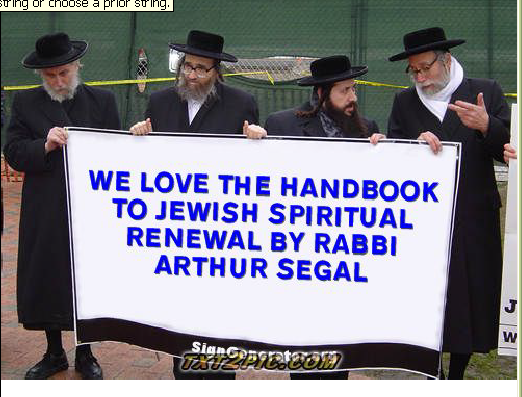
We discuss the middah, character trait, of living in shalom, throughout the majority of chapters in ''The  Handbook to Jewish Spiritual Renewal: A Path of Transformation for the Modern Jew''   
(http://www.jewishspiritualrenewal.net/ )  as well as in most chapters of ''A  Spiritual and Ethical Compendium to the Torah and Talmud''  

  
What are your ideas about living in peace?  How has learning Talmud's Derek Eretz helped you in your  interpersonal  relationships? How  has understanding the spiritual and ethical teachings of  Judaism helped you live a more joyous life? 
  
Next class, Baruch ha Shem, we will begin Chapter Ten. Thank you for joining me.
 
For those who want a d'var Torah on Parasha Emor  from '''A  Spiritual and Ethical Compendium to the Torah and  Talmud'' please click on   Rabbi Arthur Segal: RABBI ARTHUR SEGAL:EMOR:JEWISH RENEWAL:JEWISH SPIRITUAL RENEWAL:CHILLUL HA SHEM or


 https://blogger.googleusercontent.com/img/b/R29vZ2xl/AVvXsEhvdDlXFp4w94KkRvKN7nfovkdGh7MD2OqlsjPGIgZVOr9hncXirnC_9XHGy1Y1mtwlrDP0cGaOljhaDO6HNrUkfkRsQlMGtDnYItD7MOdKFmsRMpLn6Uag5CUFU2s4G30rH8pTiSoGCJQ/s1600/coverimage-771342.jpg
 

Shabbat Shalom:

Rabbi Arthur Segal_

 www.jewishspiritualrenewal.org_ (http://www.jewishspiritualrenewal.org/ ) 

Jewish Renewal_ 

www.jewishrenewal.info(http://www.jewishrenewal.info/ ) 

Jewish Spiritual Renewal

Jewish Spirituality

Eco Judaism

Hilton Head Island, SC,  Bluffton, SC, Savannah,  GA


If visiting SC's Low Country, contact us for a Shabbat meal, in our home by the sea, our beth yam.


Maker  of Shalom (Oseh Shalom) help make us deserving of Shalom beyond all human comprehension!!

 
Rabbi Arthur Segal www.jewishspiritualrenewal.org
Jewish Renewal www.jewishrenewal.info
Jewish Spiritual Renewal http://rabbiarthursegal.blogspot.com
Jewish Spirituality
Eco Judaism
Hilton Head Island, SC, Bluffton, SC, Savannah, GA
 
Rabbi Arthur Segal www.jewishspiritualrenewal.org
Jewish Renewal www.jewishrenewal.info
Jewish Spiritual Renewal http://rabbiarthursegal.blogspot.com
Jewish Spirituality
Eco Judaism
facebook.com/RabbiArthurSegalJewishSpiritualRenewal
Hilton Head Island, SC, Bluffton, SC, Savannah, GA